


Farm Life: Harvest Tycoon
Miniclip.com
I like arcade games that explain themselves in seconds and still give me a reason to play after the first round. Farm Life: Harvest Tycoon aims for that sweet spot by turning farm work into a quick, accessible loop: catch what appears, collect useful goods, and gradually build a larger farming operation. It is a free arcade game from Miniclip.com, rated for Everyone, and its appeal comes less from deep simulation than from the satisfying feeling of making progress with very little preparation.
That distinction matters. I would not open this expecting a detailed agricultural simulator with complicated markets, long-term planning, or a huge story. I see it as a light, touch-friendly game for spare minutes. The best moments come when I can start immediately, understand the current task without studying a manual, and finish a short session feeling that I moved the farm forward.
After spending time with it, my recommendation is fairly specific: this is a good fit if you want a cheerful arcade experience that can be played in small pieces. It is less convincing for anyone who needs constant novelty, deep strategy, or a completely interruption-free experience. The farming theme is pleasant, but the real test is whether the repeated actions remain enjoyable once the first layer of discovery wears off.
Why the first few minutes work
The central attraction is easy to grasp. The game asks me to catch fruits and vegetables, harvest crops, and gather animal-related goods while working toward a larger farm. That gives each action a clear purpose. I am not simply tapping objects for points; I am collecting things that belong to a bigger picture, even when the individual interaction is very simple.
I think that clarity is especially valuable on a phone. There is no need to reserve a long block of time or remember a complicated control scheme. I can pick it up while waiting for an appointment, play a little during a break, and understand what I am doing almost immediately. That immediate readability is one of its strongest qualities.
Related News






The arcade category also shapes the experience. The focus is on quick reactions and repeated collection rather than on building a realistic farm from the ground up. The tycoon idea supplies a sense of direction, while the arcade structure keeps the moment-to-moment play light. In practice, that combination makes the game easier to approach than a traditional management title, but also less demanding for players who enjoy intricate decisions.
One useful habit is to treat the opening interaction as a short warm-up instead of rushing to optimize everything. I get more from the game when I first learn the visual rhythm of the items and the timing of the collection actions. Trying to play perfectly before understanding that rhythm can make a simple game feel more stressful than it needs to be.
The store summary describes catching produce and harvesting farm goods, but the important practical takeaway is how little mental setup the game requires. I do not need to create a detailed plan before starting a session. That makes it approachable for younger players and for adults who want something relaxing rather than another system to manage.
Gallery
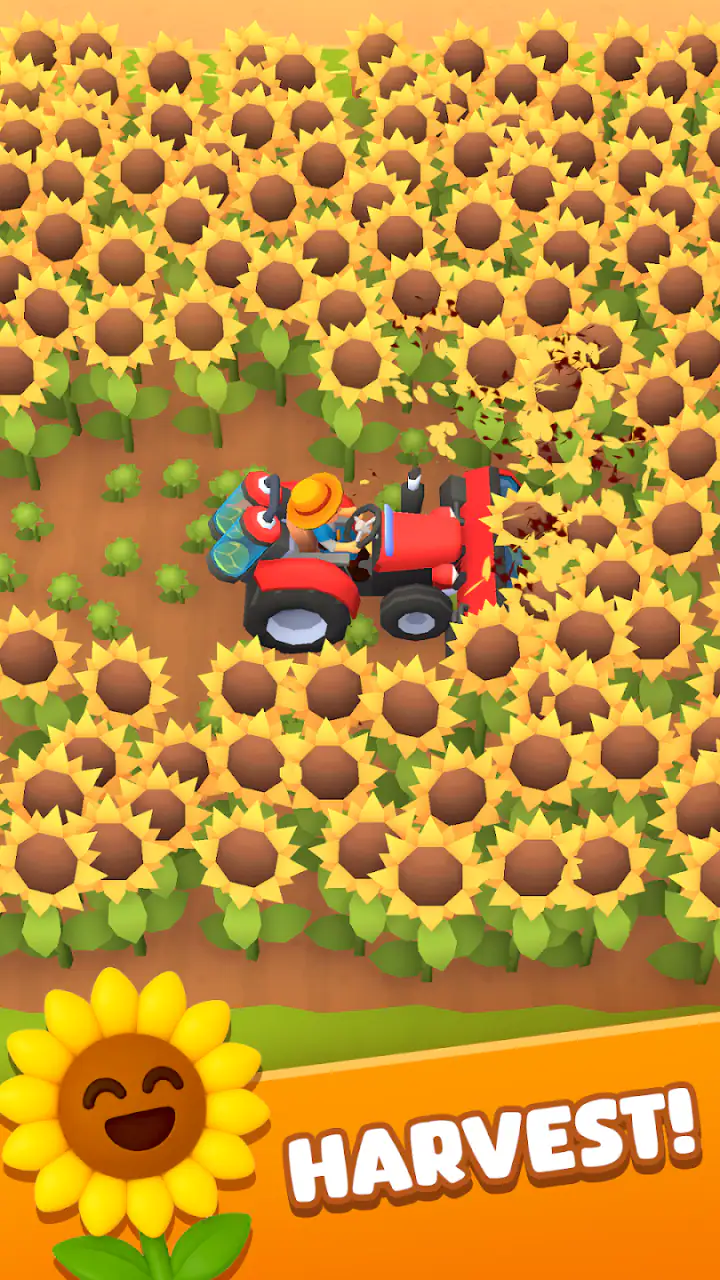
A rhythm built for spare minutes
My preferred way to play is in short bursts. A quick session has a beginning that feels immediate, a middle where I settle into the collection pattern, and an ending that does not require me to make a major commitment. This is where the game’s arcade identity helps it. The farm theme gives the actions a friendly context, but the session rhythm remains brisk enough for casual use.
That rhythm also makes the game suitable for different moods. If I have only a few minutes, I can focus on the next small objective. If I have more time, I can continue building momentum and see how far the farm develops. The game does not depend entirely on one long sitting, which is important for a title intended for mobile play.
There is a trade-off, though. Short-session design can make progress feel pleasantly manageable, but it can also reduce the sense of occasion. Players who want a dramatic farming story or a substantial strategic arc may find the individual sessions too modest. The game is strongest when I judge it as a pocket-sized activity, not as a replacement for a full management simulation.
A practical approach is to decide before opening it whether I want a reaction-focused break or a longer progression session. When I want a quick distraction, I avoid overthinking the larger farm and concentrate on clean collection. When I am playing for longer, I pay more attention to how each round contributes to the broader expansion. That small change in mindset helps the same mechanics feel less repetitive.
The game also benefits from its broad age rating. Because it is suitable for Everyone, I can imagine it working as a simple shared game for families, although adults looking for complexity may outgrow the basic loop sooner. It is easy to explain to someone who has never played a mobile arcade game, and that low barrier is part of its charm.
What happens when real life interrupts
For me, interruption tolerance is one of the most important qualities in a mobile game. Farm Life: Harvest Tycoon is most comfortable when I use it as a flexible break rather than as an activity that demands complete concentration for a long period. The basic structure is easy to resume because the objective remains familiar: collect farm goods and keep building toward a stronger operation.
That makes it a reasonable companion for everyday situations such as waiting for food, sitting on public transport, or taking a short pause between tasks. I can play when I have attention to spare and stop when something else needs it. The game’s simple premise does not punish me with a complicated narrative thread that I have to reconstruct after putting the phone down.
Still, I would not assume that every moment is equally safe for multitasking. Catching and collecting are arcade actions, so a distracted player may miss things or perform less efficiently. The right balance is to play when I can give the screen at least a little attention, then close it rather than trying to force a session into a situation where I am constantly interrupted.
One of my more useful routines is to finish a small collection goal before leaving the game instead of quitting in the middle of a hectic sequence. That gives the session a natural stopping point and makes returning feel cleaner. It is a minor habit, but it suits the game’s short-burst design and avoids the feeling that I abandoned an unfinished task.
The minimum operating-system requirement is Android 7.1, which means the game is positioned to work on a broad range of Android devices rather than only recent phones. Even so, the experience will depend on the particular device and its condition. A player using older hardware should keep expectations sensible, especially if other apps are running at the same time.
Where the pleasant loop starts to repeat
The biggest question is replay value. Catching produce and gathering animal goods feels satisfying because the actions are immediate and the farm gives them context. However, the same simplicity that makes the game welcoming can limit how much it changes from one session to the next. Once I understand the basic pattern, the pleasure depends on whether the sense of expansion remains strong enough to motivate another round.
I find the game more enjoyable when I focus on visible progress rather than pretending each collection action is endlessly fresh. The reward is in seeing the farm empire grow from repeated small efforts. That is a familiar arcade-management trade-off: the individual move is simple, while the longer-term goal gives me a reason to continue.
Players who enjoy incremental progress may be comfortable with that arrangement. They can use the game as a gentle routine, collecting goods whenever they have a moment and gradually improving the farm. Players who need frequent new mechanics, surprising challenges, or a strong competitive layer may feel the repetition sooner.
A useful way to protect the game’s replay value is to vary the length and purpose of sessions. I might play only for a quick collection run one time, then spend a longer break trying to push the farm forward another time. I also recommend avoiding marathon play immediately after installing it. Because the core loop is straightforward, playing for too long at once can reveal its repetition faster than playing it in small portions.
This is also where it differs from more elaborate farming alternatives. A traditional farming simulator usually asks me to plan schedules, manage several resources, and make decisions whose consequences unfold over a longer period. Farm Life: Harvest Tycoon is easier to enter and less demanding, but it does not offer the same strategic depth. On the other hand, compared with a purely reflex-based arcade game, the farm-building goal gives my actions more continuity.
Free to start, with a purchase decision to consider
The game is free to download, which makes trying it straightforward. That is important for a casual title because I can test the collection loop without committing money first. The free entry also suits families and occasional players who are unsure whether a farm-themed arcade game will hold their attention.
There are in-app purchases ranging from $0.99 to $119.99 per item. That is the part I would approach carefully. A low-cost optional purchase may feel reasonable if I am enjoying the game, but the upper end is significant enough that I would not make any purchase casually. I would decide in advance whether I am happy to play at the free pace rather than allowing a moment of impatience to determine spending.
For parents, the Everyone rating makes the content broadly approachable, but the purchase model is still worth discussing before handing the phone to a child. The age suitability of the game and the financial suitability of its optional items are separate questions. I would set clear expectations about purchases and keep the game in the category of a free casual activity unless I had a specific reason to spend.
This payment structure also affects who should skip the game. If I dislike any mobile title that includes optional purchases, even when the basic download is free, I would probably be happier with a paid arcade game that has a simpler ownership model. If I can ignore optional spending and enjoy gradual progress, the free version is a more comfortable proposition.
How I would use it in an ordinary day
Imagine that I have ten minutes before leaving home. I open the game, catch a few available items, and use the resulting progress to continue developing the farm. I do not need to remember a long quest chain or prepare a detailed production schedule. When it is time to go, I stop after a natural collection point and return later when another short break appears.
That scenario explains the game better than the idea of a huge farming empire. Its practical value is not that it replaces a serious simulation; it is that it turns otherwise empty minutes into a small, cheerful routine. The farm theme makes the repeated actions feel warmer than a generic score-chasing game, while the arcade controls keep the commitment low.
I would also recommend it to someone who wants a first farming game without a steep learning curve. The basic objective is easy to communicate, and the Everyone rating supports its family-friendly positioning. Conversely, I would point a dedicated strategy fan toward a deeper farming or management alternative, especially if they want crop planning, economic trade-offs, or extensive customization to be the main attraction.
The game’s audience is therefore quite specific. It works for casual players, short-session users, families looking for an approachable game, and people who enjoy watching a simple project grow. It is not the best match for players who measure replay value by constant mechanical change or who want every session to demand a new tactical solution.
Performance expectations and the current build
The current version is 1.3, and the game has reached over one hundred thousand installs. Its average rating is 4.7 from around three thousand six hundred ratings, while the store shows 73 written reviews. Those figures suggest that the accessible farm-and-arcade formula is connecting with a meaningful group of players, although a rating alone cannot tell me whether the game will match my personal tolerance for repetition.
I use those numbers as context rather than as a substitute for judgment. A highly rated casual game can still be wrong for someone who wants depth, and a simple game can be exactly right for someone who values instant play. The more useful question is whether I want a low-friction collection loop that can fit around the rest of my day.
Because the game is from Miniclip.com, I expected a polished, approachable presentation aimed at broad mobile audiences, and that general direction fits the experience. The developer name may reassure players already familiar with accessible arcade games, but it does not change the central trade-off: ease of entry comes with a lighter strategic layer.
I would keep the app updated through the normal platform process and judge it over several short sessions rather than one long first impression. The first play can make the farm feel novel; the more revealing test is whether I still enjoy opening it when the basic actions are already familiar. That is where the game’s true replay value becomes clear.
My casual verdict
Farm Life: Harvest Tycoon succeeds when I want a friendly arcade game that starts quickly, fits into interrupted days, and gives simple collection actions a sense of direction. Catching fruits and vegetables, harvesting crops, and gathering animal goods create an inviting routine, while the farm-building goal adds more purpose than a score counter alone.
Its limitations are equally clear. The loop may feel repetitive to players who need constant novelty, and the tycoon label should not be mistaken for deep management simulation. The optional purchase range also deserves a deliberate approach, particularly for families. I would play it free first, decide whether the repeated actions genuinely relax me, and only then consider whether any purchase makes sense.
My final view is positive but targeted. This is a good choice for short, low-pressure sessions and for anyone who likes seeing modest actions accumulate into a larger farm. It is not the game I would choose for complex planning, lengthy storytelling, or demanding strategic replay. If your ideal mobile break is a few minutes of clear goals, immediate interaction, and gentle progress, this one is worth trying; if you need every return visit to feel substantially different, I would look elsewhere.
FAQs for Farm Life: Harvest Tycoon
What is Farm Life: Harvest Tycoon about?
Farm Life: Harvest Tycoon is a casual farming and management game focused on building a productive agricultural business. You plant and harvest crops, manage resources, expand your farm, and improve facilities as your operation grows. Its progression is designed for short play sessions, making it suitable for players who enjoy relaxed simulation gameplay with steady upgrades and simple economic decisions.
Is Farm Life: Harvest Tycoon free to download and play?
The game can generally be downloaded and played without an upfront purchase, although it may include optional in-app purchases. These purchases can help players obtain resources, speed up progress, or unlock certain conveniences, but they are not necessarily required to enjoy the main farming experience. Check the store listing for the current pricing, supported devices, and purchase details.
Does Farm Life: Harvest Tycoon require an internet connection?
Some parts of Farm Life: Harvest Tycoon may work without a continuous internet connection, which is useful when you want to play during travel or in areas with limited coverage. However, online access may be needed for advertisements, cloud features, updates, special events, or restoring purchases. Availability can vary by version and device, so offline functionality should not be assumed for every feature.
Are there advertisements or in-app purchases in the game?
Players should expect that Farm Life: Harvest Tycoon may contain advertising and optional in-app purchases. Advertisements can sometimes provide rewards or appear between activities, while purchases may offer currency, boosts, or faster progression. Before downloading, parents and players who want to avoid unexpected charges should review the device’s purchase settings and check the official store page for the latest information.
Is Farm Life: Harvest Tycoon suitable for children and casual players?
Farm Life: Harvest Tycoon is generally approachable for casual players because its core activities are easy to understand and progress is introduced gradually. The farming theme is family-friendly, but suitability for children depends on the presence of advertisements, in-app purchases, and the game’s age rating in your region. Parents should review permissions, privacy information, and purchase controls before allowing younger users to play.
Pros
- Relaxing farming gameplay suitable for short or extended sessions.
- Simple controls make planting and harvesting easy for all ages.
- A wide range of crops and animals adds variety to daily tasks.
- Progression gives you clear goals as your farm continues to grow.
- Bright visuals and cheerful sounds create a pleasant rural atmosphere.
Cons
- Some upgrades and expansions require considerable time to unlock.
- Energy or task limits may interrupt longer play sessions.
- The number of activities can feel repetitive after extended play.
- Frequent notifications may become distracting for some players.
- Offline functionality may be limited for certain features or rewards.


